 Machine Octopus
Quality used machinery from trusted brokers
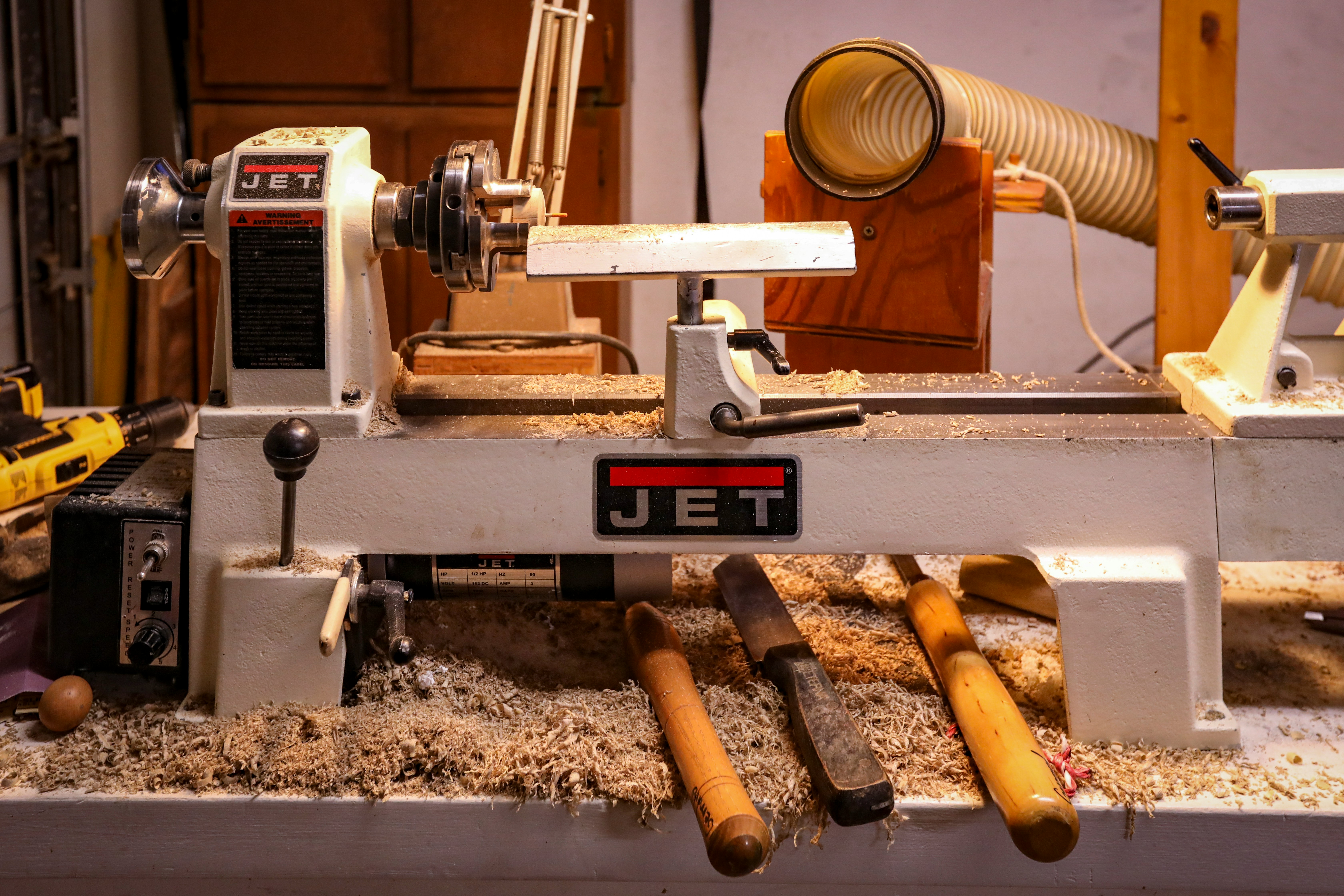
Used woodworking machines: a lowdown on the big-hitter brands, and why European engineering still wins
A buyer's guide to panel saws, edgebanders, and CNC machining centres on the used market
SCM, Homag, Holzma, and Weeke dominate the used woodworking market - but three of them are one company. Here's what each actually does.
Woodworking is by far the biggest category on Machine Octopus - 2,794 machines, more than every other category combined. Four names dominate that inventory: SCM, Homag, Holzma, and Weeke. Treating them as four independent rivals, the way you'd compare Arburg against Krauss Maffei, would be a mistake. Homag, Holzma, and Weeke are all one company. Homag Group, German, and under Dürr AG ownership since 2014, grew by buying up specialists - Weeke joined in 1986, Holzma in 1987 - and each still trades under its own name because each still does a different job. SCM is the odd one out, an Italian all-rounder from Rimini that competes across the whole line rather than owning one stage of it. Knowing which is which matters more than knowing the badge, because it tells you whether you're looking at one station on a production line or an alternative to the whole thing.
Why these four, and not something cheaper and newer
Homag alone holds more than 30% of the global woodworking machinery market. Together with SCM and a handful of other European groups, Biesse, Felder, Weinig, the top players account for something like half of global sales, and Homag, SCM, and Biesse alone hold over half of that between them. That's real scale, built up over decades, and it's exactly why these names dominate the used market: enough machines have been sold for long enough that a genuine secondhand market exists at all.
There's also a measurable reason these machines cost more than a comparable new machine from a Chinese manufacturer, and it isn't just brand reputation. Premium European machines from Homag Group and SCM typically hold tolerances down to around ±0.01mm, tighter than the roughly ±0.05mm positioning accuracy common on mid-range Chinese CNC equipment, and their frames are usually stress-relieved and left to age for months before final assembly rather than simply heat-treated, which matters for how well a machine holds its accuracy after years of hard use. Chinese woodworking machinery has genuinely improved and now accounts for more than half of global CNC machine production, and for plenty of woodworking, sign-making, or soft-material work, that accuracy is entirely adequate. What you're still paying a premium for with Homag Group or SCM, new or used, is a mature European service network, a technician can often diagnose a fault remotely, and a proven multi-decade track record that keeps resale value intact, exactly the kind of track record a newer budget brand hasn't had time to build yet.
None of this is really a Germany-versus-Italy story, since Homag Group and SCM are the German and Italian halves of the same European standard. It's a Europe-versus-newer-entrants story, and worth knowing before you assume the cheapest new machine and the cheapest used one are solving the same problem.
Holzma: the cutting stage
Every panel-based production line starts with cutting sheet stock down to size, and Holzma is the name that dominates that first stage. Its beam saws (the industry term for panel-dividing saws) slice full sheets into panels ready for edging and drilling, with cutting lengths well over four metres and multi-gripper feed systems built to handle stacks of panels rather than one sheet at a time. A Holzma HPP 350 /43/43/X Optimat, currently listed, is a fair example: a 2013 beam saw with a 4,300mm cutting length and nine grippers, priced at €27,999 - this is the machine behind the first cut in kitchen cabinets, wardrobes, and flat-pack furniture, before any edging or drilling happens to the panel. If your business starts with cutting panels down before anything else happens to them, this is the stage you're buying into.
Weeke: the drilling and routing stage
Once a panel is cut to size, it needs holes, dowels, hinges, and routed edges, and that's Weeke's specialism. The brand built its reputation on point-to-point boring - machines that drill, rout, and insert dowels without repositioning the workpiece, which matters enormously in flat-pack furniture and kitchen cabinet production, where a single panel might need dozens of holes across three different faces. A Weeke Venture 3, currently on our site, shows the format: nineteen vertical drilling spindles, six horizontal, and a groove saw, all on a pod-and-rail table, listed at €17,000-20,000 - this is the machine boring the hinge holes, shelf pin holes, and dowel holes that turn a flat panel into a kitchen cabinet or wardrobe carcase.
Homag: the finishing stage, and the whole line if you want it
Homag itself is best known for edgebanders, the machines that glue and trim a strip of matching material along a panel's raw edge, and for the software and conveyor systems that link an entire line together. A Homag KAL 370 Ambition, currently listed, handles edgebanding up to 20mm thick at 18 metres a minute, considerably more capacity than SCM's equivalent machine below, and sits at a correspondingly higher price, €39,000-49,000 against SCM's €15,000-20,000 - the kind of throughput a factory-scale kitchen or furniture manufacturer needs, running two shifts rather than one. That gap is the difference between a workshop-scale edgebander and a machine built for a factory running two shifts.
SCM: the Italian all-rounder
SCM doesn't specialise in one stage the way the Homag Group brands do. Founded in Rimini in 1952 and now turning over roughly €900 million a year, it builds panel saws, edgebanders, CNC machining centres, and sanders as a single, broad range, competing with Holzma, Weeke, and Homag at every stage rather than just one. A SCM Olimpic K360, currently listed, is the direct comparison to the Homag edgebander above - same sub-category, smaller spec, and roughly a third of the price, a better fit for a joinery workshop or smaller furniture maker finishing panels in smaller runs rather than a factory line. If you'd rather deal with one supplier across your whole line instead of matching three specialist brands together, SCM is the standard alternative.
What actually matters more than the badge
If you're buying a single station, compare like for like within that station - cutting length and gripper count for a beam saw, spindle count and working dimensions for a drilling and routing centre, edgeband thickness and feed rate for an edgebander. A cheaper Homag Group machine beats a pricier SCM one if it's actually the right size for your panels, and vice versa.
If you're buying a whole line, there's a real argument either way. Holzma, Weeke, and Homag machines are designed to run on the same production software and conveyor standards, since they're built by the same group, which can simplify integration if you're assembling a line from used equipment bought separately. SCM offers the same one-vendor simplicity from a single Italian supplier instead of three German specialist names. Neither is wrong - it depends on whether you're filling a gap in an existing line or building one from scratch.
A kitchen cabinet door is the whole line in miniature, and a useful way to picture how these four brands actually fit together in real furniture and cabinet-making production. It gets cut to size on a Holzma beam saw, edged on a Homag or SCM edgebander, then bored for hinges and shelf pins on a Weeke CNC machining centre. Three different machines, one everyday product, and exactly why the Homag Group's structure, and SCM's alternative to it, exists in the first place.
A few things specifically catch people out on this category. On any Homag Group or SCM edgebander, ask whether the glue system is PUR or EVA before you buy. PUR gives a stronger bond and is standard in higher-volume shops, but PUR glue left sitting in an idle gluing station, exactly the situation with a used machine that's been waiting for a buyer, can harden and carbonise, sometimes requiring the whole gluing station to be replaced. EVA is far more forgiving if the machine's been idle for a while, worth knowing given how long some used listings sit before they sell.
On a beam saw like the Holzma above, wear shows up in the details rather than anything dramatic. Ask how often the blade's been sharpened or replaced, and look for uneven cut quality, which usually points to worn guide rails or misaligned bearings rather than the blade itself. The rack-and-pinion gear that drives the grippers is expensive to replace if it's worn, so it's worth asking about specifically rather than assuming a machine that looks clean has been well maintained mechanically.
And on the CNC side, Homag Group machines run on Homag's own woodWOP software, which has gone through nine major versions since it launched in 1992. An older machine running an early woodWOP version isn't necessarily a problem, but check it's compatible with whatever design and cutting software you're already using, or budget for an upgrade, before assuming you can plug it in and go.
One more running cost worth budgeting for on any of these machines: none of them work without a properly sized dust and chip extraction system, and it's rarely included in a used listing. CNC routing and boring work in particular needs real suction at the cutter head, upwards of 500 CFM on a single spindle, and pressure at the hood matters more than raw airflow, since the cutting area on a CNC machining centre or edgebander is far more open than on an enclosed machine like a table saw. Ask what extraction system the seller is currently running the machine on, and price in a proper dust extraction setup if the listing doesn't include one.
Where to look
We list SCM, Homag, Holzma, and Weeke machines, along with other manufacturers, in our woodworking machines category, the largest on the site. If you're assembling a full production line rather than one station, our used injection moulding machines guide covers the same badge-versus-spec logic for plastics processing, and our due diligence checklist covers what to check before you commit to any of it.
This article is for general informational purposes only and does not constitute legal, financial, tax, or professional advice. Always confirm compliance, tax, and import requirements with a qualified professional or the relevant authority before making a purchasing decision.
More from the Blog
View all articles →
25 August 2026
NewWhat "Upon request" pricing actually means, and how to get a real number
Why most used machinery listings don't show a price, and what actually happens once you ask for one

20 August 2026
New vs used industrial machinery in 2026: the real depreciation numbers, and where Chinese manufacturers fit in
What new machinery actually costs over time, what used really saves, and how Chinese manufacturers change the calculation
7 August 2026
Used metal processing machines: a lowdown on the big-hitter brands, and why buying German is still the way to go
A buyer's guide to CNC machine tools and laser cutting on the used market