 Machine Octopus
Quality used machinery from trusted brokers
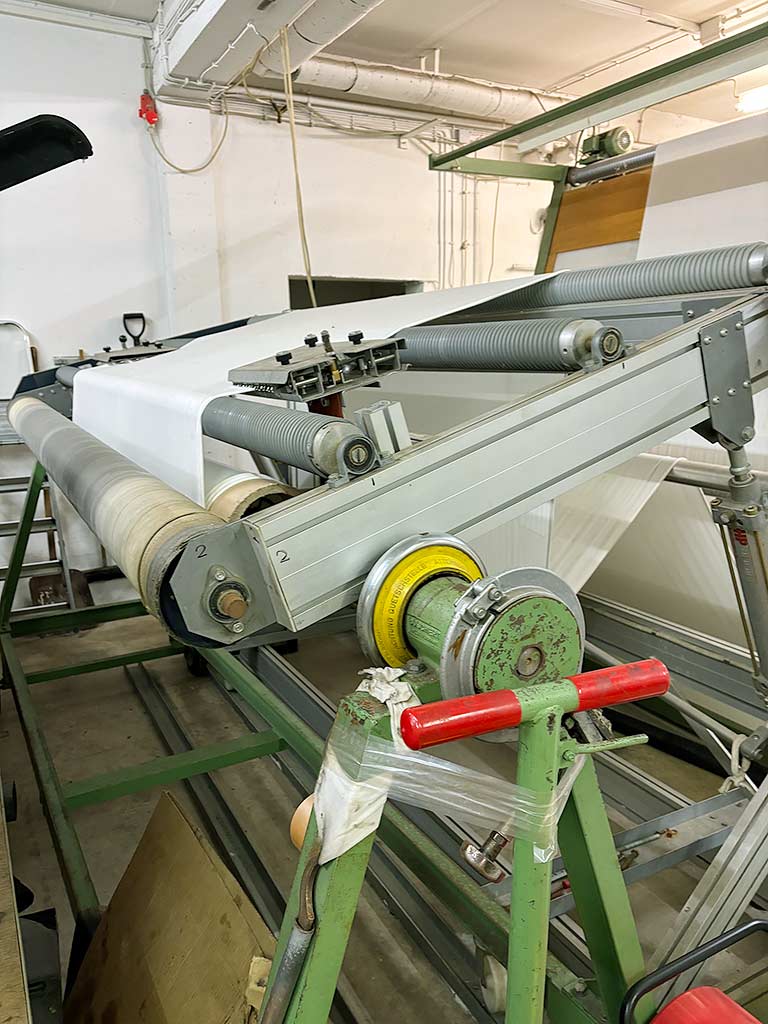
Calator/Weiss/Bastian SEM-SRE Slitting and Winding System
Specifications
Overview
Technical Specifications
- Working width (elastic fabrics)
- 1860 mm
- Working width (non-elastic fabrics)
- 2400 mm
- Shear width
- 980 mm
- Production capacity
- 200 kg/h
- Current fabric web width
- 1700 mm
- Roll width
- 1780 mm
- Roller width
- 2700 mm
Weight & Dimensions
- Tubular bale weight
- approx. 30 kg
- Large roll weight range
- 300 kg - 500 kg
- Total system dimensions (X/Y/Z)
- approx. 5200 mm / 4000 mm / 5200 mm
- Total system weight
- approx. 3000 kg
Interested in this machine?
Get in touch with the seller to find out more, discuss pricing, or arrange a viewing.
Contact Seller
Know someone who might be interested?
Share this machine with colleagues or friends
Share this machine
AI Description
BetaCapabilities
The Calator/Weiss/Bastian SEM-SRE is a complete textile cutting and winding system designed to process tubular fabric bales into finished rolls. It automatically seals tubular bales together, cuts the fabric to precise widths, and winds it onto large bobbins for storage and transport. The system handles both elastic and non-elastic fabrics across working widths of 1860mm and 2400mm, with a shear width of 980mm and production capacity of 200kg/h. Output rolls range from 300–500kg, making this ideal for high-volume textile operations.
Industries & Uses
This equipment is essential for textile mills, fabric converters, and distributors who need to process raw or partially processed fabrics into market-ready rolls. It's particularly valuable for businesses handling technical textiles, industrial fabrics, and apparel materials. The system significantly reduces manual labor and ensures consistent roll dimensions and weight.
What to Check When Buying
When evaluating this 1988 machine, prioritize inspecting the cutting blades for wear or damage, as replacement is a primary maintenance cost. Request complete maintenance records and test the winding and tension systems thoroughly. Check hydraulic lines and motors for leaks, and verify that all safety guards and controls function properly. Ask about recent repairs and the condition of roller bearings, which experience heavy use. Given its age, factor in potential costs for refurbishment and spare parts availability.
This description is AI-generated and is intended as a general guide only. As with all AI-generated content, it may contain inaccuracies. Please verify all details directly with the seller before making a purchasing decision.
Interested in this machine?
Get in touch with the seller to find out more, discuss pricing, or arrange a viewing.
Contact Seller
Similar Machines
More machines in Cutting machines
Know someone who might be interested?
Share this machine with colleagues, partners, or friends who might be looking for similar equipment.