 Machine Octopus
Quality used machinery from trusted brokers
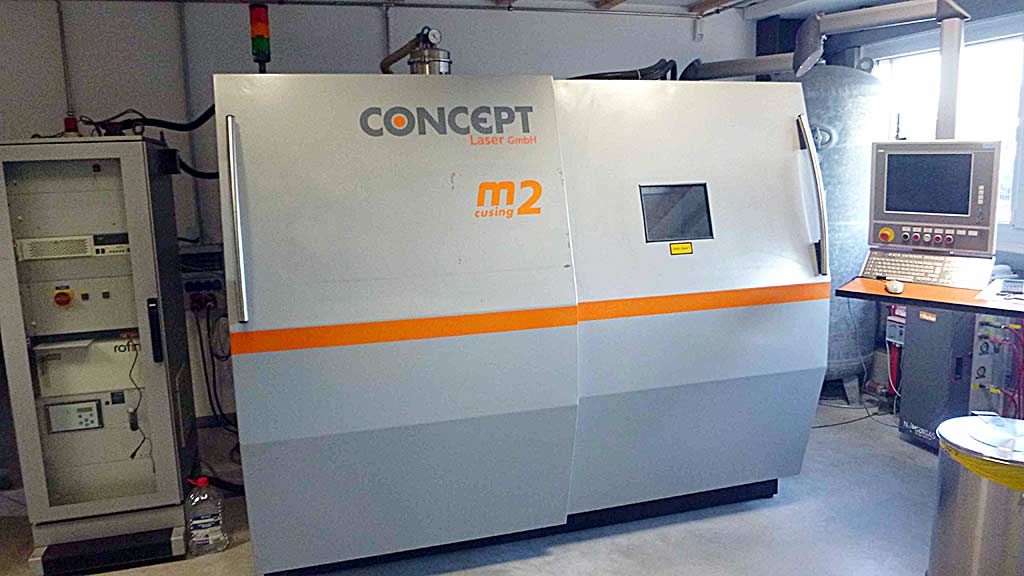
Concept Laser M2-cusing 3D Metal Printer
Specifications
Overview
Technical Specifications
- Technology
- Laser melting (SLM)/LaserCusing
- Working dimensions X/Y/Z
- 250mm/250mm/280mm
- Layer thickness range
- 20µm-80µm
- Max. scanning speed
- 6m/s
- Focus diameter range
- 50µm-500µm
- Laser power
- 200W
- Printing materials
- Stainless steel, aluminum, titanium, nickel-based alloys, cobalt-chrome
Weight & Dimensions
- Machine dimensions X/Y/Z
- Approx. 2450mm/2400mm/1650mm
- Machine weight
- Approx. 2000kg
- Laser cabinet dimensions X/Y/Z
- Approx. 600mm/1200mm/1200mm
- Laser cabinet weight
- Approx. 180kg
- Blower dimensions X/Y/Z
- Approx. 550mm/1450mm/550mm
- Blower weight
- Approx. 70kg
Accessories
Known Issues
Interested in this machine?
Get in touch with the seller to find out more, discuss pricing, or arrange a viewing.
Contact Seller
Know someone who might be interested?
Share this machine with colleagues or friends
Share this machine
AI Description
BetaCapabilities
The Concept Laser M2-cusing is a selective laser melting (SLM) system that builds metal parts layer-by-layer using a 200W laser. With a build area of 250×250×280mm and layer resolution down to 20 microns, it produces highly detailed components from stainless steel, aluminum, titanium, nickel-based alloys, and cobalt-chrome. The machine's 6m/s scanning speed and adjustable focus (50-500µm) enable both precision detail work and faster production runs.
Industries & Uses
This technology serves aerospace, medical device, automotive, and jewelry manufacturers who need custom metal parts, prototypes, or low-volume production that traditional machining can't achieve economically. Industries use it for turbine blades, orthopedic implants, dental crowns, fuel injectors, and bespoke components where complex geometries add value.
What to Check When Buying
Since this unit requires repair, thoroughly inspect the laser tube's condition and output power before committing—laser degradation is the most common wear issue. Request complete maintenance records, particularly for the recoating system, powder delivery mechanisms, and build platform calibration. Verify the machine's software licensing and whether spare parts are still available. Budget for professional installation and recalibration, as these systems demand precise environmental conditions and expert setup.
This description is AI-generated and is intended as a general guide only. As with all AI-generated content, it may contain inaccuracies. Please verify all details directly with the seller before making a purchasing decision.
Interested in this machine?
Get in touch with the seller to find out more, discuss pricing, or arrange a viewing.
Contact Seller
Similar Machines
More machines in Other machinery
Know someone who might be interested?
Share this machine with colleagues, partners, or friends who might be looking for similar equipment.