 Machine Octopus
Quality used machinery from trusted brokers
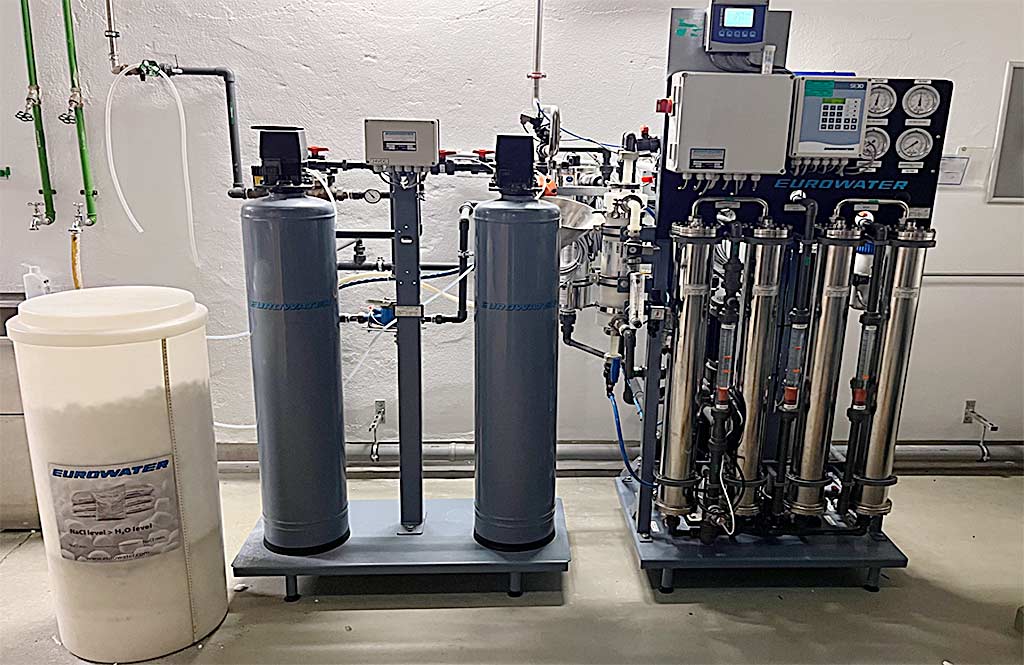
Eurowater DPRO B1 Reverse Osmosis System
Specifications
Overview
Two-Stage Reverse Osmosis System
- Model
- Eurowater DPRO B1-2/2
- Year of manufacture
- 2013
- Max. flow rate
- 1.08 m³/h
- Pressure pipes
- Stainless steel
- Pipe system
- PVC
- Membrane diameter
- 4 inches
- Dimensions X/Y/Z
- 730 mm / 700 mm / 2000 mm
Water Softener
- Model
- Eurowater SM 42-F
- Year of manufacture
- 2015
- Dimensions X/Y/Z
- 1000 mm / 500 mm / 1650 mm
Documentation
Interested in this machine?
Get in touch with the seller to find out more, discuss pricing, or arrange a viewing.
Contact Seller
Know someone who might be interested?
Share this machine with colleagues or friends
Share this machine
AI Description
BetaCapabilities
This two-stage reverse osmosis (RO) system from Eurowater produces high-purity water by forcing pressurized water through semi-permeable membranes, removing dissolved salts, minerals, and contaminants. With a maximum flow rate of 1.08 m³/h and 4-inch membranes, it's designed for consistent, reliable operation. The included softener (Eurowater SM 42-F) pre-treats incoming water by removing hardness-causing minerals, protecting the RO membranes and extending their lifespan. Stainless steel pressure pipes and PVC piping ensure durability and chemical compatibility.
Industries & Uses
RO systems are essential in pharmaceuticals, food and beverage production, electronics manufacturing, cosmetics, and water treatment facilities. They're also used by laboratories, hospitals, and businesses requiring demineralized or ultra-pure water for production or cleaning. The softener makes this setup particularly valuable for hard-water regions, reducing operating costs and maintenance needs.
What to Check When Buying
When inspecting, request full maintenance records and ask about membrane replacement history—membranes typically last 3–5 years and are a key wear item. Check for scaling or mineral buildup inside the system, verify pressure gauges and flow meters work accurately, and inspect all seals and connections for leaks. Confirm water quality test results from recent operation. Since both units date back to 2013–2015, budget for potential membrane replacement soon after purchase.
This description is AI-generated and is intended as a general guide only. As with all AI-generated content, it may contain inaccuracies. Please verify all details directly with the seller before making a purchasing decision.
Interested in this machine?
Get in touch with the seller to find out more, discuss pricing, or arrange a viewing.
Contact Seller
Similar Machines
More machines in Filter systems
Know someone who might be interested?
Share this machine with colleagues, partners, or friends who might be looking for similar equipment.