 Machine Octopus
Quality used machinery from trusted brokers
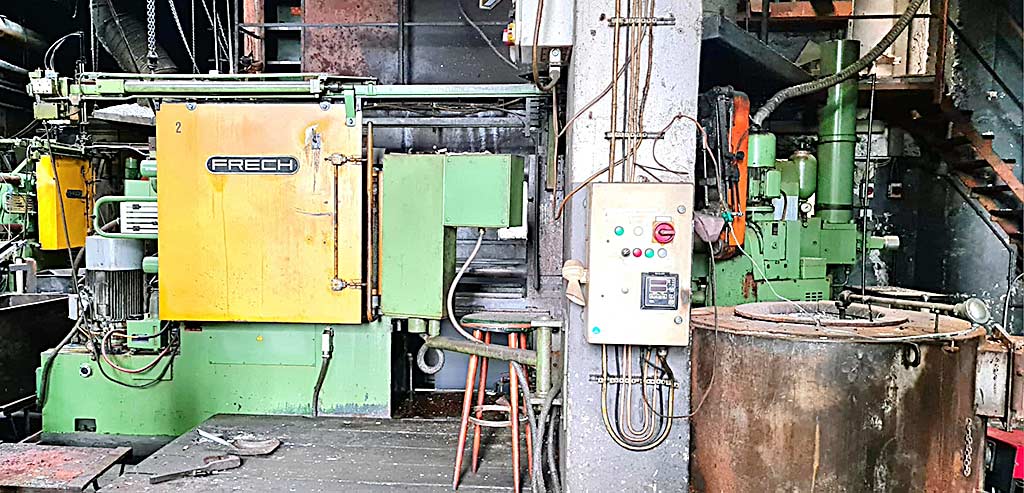
Oskar Frech DAK 200 Diecasting Plant
Specifications
Overview
Technical Specifications
- Clamping force
- 2200 kN
- Opening force
- 71 kN
- Max opening stroke
- 430 mm
- Mold closure
- Double toggle lever
- Pressure chamber
- Cold chamber
- Position
- Horizontal
- Filling piston diameter min/max
- 40 mm / 70 mm
- Pressure chamber filling volume min/max
- 293 cm³ / 898 cm³
- Casting pressure
- 1990 bar
- Blast area min/max
- 110 cm² / 338 cm²
- Output
- 780 cycles/h
Weight & Dimensions
- Clamping plate dimensions X/Y
- 755 mm / 755 mm
- Column spacing
- 500 mm / 500 mm
- Mold height min/max
- 250 mm / 600 mm
- Min mold dimensions X/Y
- 296 mm / 296 mm
Accessories
Interested in this machine?
Get in touch with the seller to find out more, discuss pricing, or arrange a viewing.
Contact Seller
Know someone who might be interested?
Share this machine with colleagues or friends
Share this machine
AI Description
BetaCapabilities
The Oskar Frech DAK 200 is a horizontal cold-chamber aluminum die casting machine designed for high-volume production of metal components. With a clamping force of 2200kN and casting pressure up to 1990bar, it delivers up to 780 cycles per hour. The dual-toggle mold closure system provides reliable precision, while the adjustable pressure chamber (293–898cm³) and filling piston (40–70mm) accommodate various casting sizes. Clamping plates measure 755×755mm with 500mm column spacing, supporting mold heights from 250–600mm.
Industries & Uses
Automotive suppliers, hardware manufacturers, and consumer goods producers rely on die casting machines like this for producing complex metal parts—from engine components to housings and decorative fittings—at scale. The high cycle rate makes it ideal for businesses needing consistent output without large capital investment in new equipment.
What to Check When Buying
When evaluating this 1989 model, request full maintenance records and inspect the toggle mechanism closely for wear or slack, as this drives mold precision. Check the pressure chamber and heating system for corrosion or seal degradation. Ask about mold inventory and whether dies are included. Verify that all hydraulic seals function properly and confirm the machine's last calibration date. Worn components are typical in machines this age but should factor into your purchase decision.
This description is AI-generated and is intended as a general guide only. As with all AI-generated content, it may contain inaccuracies. Please verify all details directly with the seller before making a purchasing decision.
Interested in this machine?
Get in touch with the seller to find out more, discuss pricing, or arrange a viewing.
Contact Seller
Similar Machines
More machines in Diecasting
Know someone who might be interested?
Share this machine with colleagues, partners, or friends who might be looking for similar equipment.